
Share Irene May Hall Riggs's obituary with others.
Invite friends and family to read the obituary and add memories.
Stay updated
We'll notify you when service details or new memories are added.
You're now following this obituary
We'll email you when there are updates.
Select your format and elements to print

IN LOVING MEMORY OF Irene May Hall Riggs
Irene May
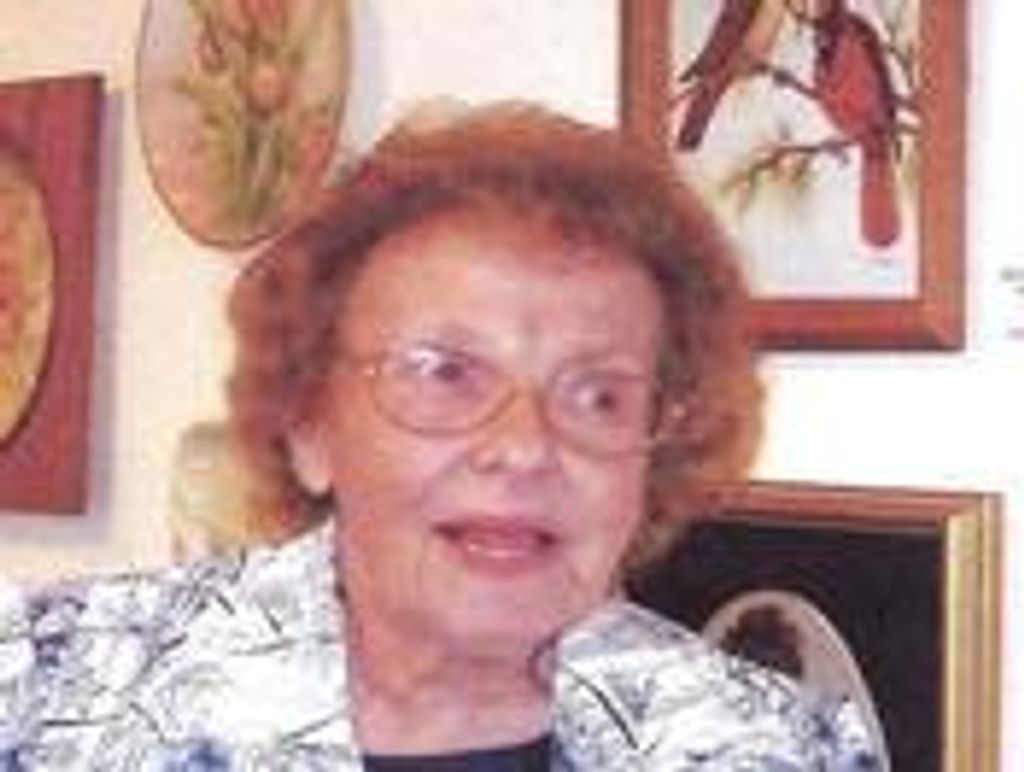
Hall Riggs
May 15, 1923 — Mar 2, 2011
Irene May Hall Riggs' Obituary
Below is an excerpt from the biography written by Irene Riggs:
My family came from England. The Halls, my father's side of the family, came from England through Canada. My grandfather, Edward Hall was one of those who immigrated to the United States. As soon as he arrived in the States, he enlisted in the Union Army during the Civil War. He was gravely wounded at the battle of Antietam. He went home and became a judge for Nuckolls County in the county seat of Nelson, Nebraska. His son, Warren had a John Deere dealership in Nelson. He inherited this farm implement business from one of his uncles. His son, Warren, (my father) married Pearl Eno (my mother). Pearl's family, the Eno's, came directly from England on a ship to the East Coast of the United States. They moved from there directly to Nebraska. I was born in Nelson, Nebraska on May 15, 1923. I was the second of three daughters. My younger sister was Carol, my older sister was June. June was born around 1915. She suffered from childhood epilepsy and it was my responsibility to help take care of her. Often, I would stand up for her when she experienced seizures at school. June had two children, Don and Cheryl. June died in the 1970s. Carol, the youngest Hall daughter, was born around 1930. She died and was survived by three children: Chris, Steve and "Red." I was married to Frances H. Riggs and was blessed with two sons, Martin and Ronald Willoughby, and five step-children: Page Bradley, Valerie Makovic, John Riggs, Ridgely Riggs and Miriam Riggs. Son Marty lives in North Carolina with his wife Kim. They have three children: Nicole, Matthew and Ryan – and two grandchildren. Her son Ron and his wife Terri live in Arizona. They have two children, Tracie and Ronnie and several grandchildren.
In reaching this advanced stage in life, I often think about the past and my happy, carefree years growing up in the small town of Nelson, Nebraska. It was very much like the other small towns in the nineteen thirties. Nelson was located on the main road between Superior (a town to the south) and Hastings (a town to the north). They were all laid out similarly. Main Street went up through the middle of town and all the businesses in town were on Main Street. Houses and churches were on either side of the business area. My father's John Deere business was just up the street – beyond the grocery stores and other places of business. John Deere made farm equipment – tractors, combines, hay balers and the like. All of those small businesses are mostly gone now as the farms out in the country are larger and not so many people live around town as they did in those days. Small towns were a place where people gathered to visit with each other, take care of their daily business needs (banking, groceries, and clothing). Nelson even had a town band. I played in the town band with my father; he played the trombone and I played the clarinet. On special occasions, we would form up and march to the local cemetery to play there in honor of the fallen soldiers. I still recall hearing about my grandfather being wounded at Antietam. People in Nelson were proud of their heritage. We knew where we were born and raised. We loved our country. This is the part of the country I came from, and now I want to share some of my memories with you, the younger generation.
As a child, I had to grow up quickly and help look after things; this included my sister when she needed my help. Things followed a routine around Nelson. I remember that Mondays were wash days. My mother hung the clothes out to dry and did the ironing. Mondays were also bean soup days – at least for lunch. I walked home from school to have a steaming bowl of bean soup. I liked following my father around, doing "boy things," rather than playing with dolls and the girl things. My father used to take me pheasant hunting when that was in season – in October. My father encouraged me to play in the town band, and when I was older I played in the school band, where I played the clarinet. I went to Sunday School at the local church and sang in the choir. My main extracurricular interest in school was organizing the cheer leaders. I helped design their uniforms and wrote the routines that they used at the various athletic events. I have always been an outgoing person, taking part in all activities.
After World War II began, I went to work at a new Army base that opened thirty miles away. We stayed there during the week in dormitories and traveled by bus back to Nelson on the weekends. This was all a great experience for a girl just out of high school. Working for the military was the beginning of a long career of service to the country. I worked at increasingly higher levels, until, at the end of my career, I worked for the office of the Secretary of Defense in the Pentagon.
PROFESSIONAL INVOLVEMENT IN THE INTELLIGENCE FIELD
During my tour of duty in the Canal Zone, the entire area was plagued with an Anti-U.S. feeing. This was particularly the case with the relations between the United States and the government of Panama. All of this often resulted in armed mobs crossing over into the Canal Zone to demonstrate their displeasure toward the United. Unrest was not confined to Panama but seemed to be widespread among the Latin countries of South and Central America.
I worked for the Directorate of Intelligence for the United States Southern Command, which had the responsibility for the area from the Rio Grande in Texas down to the southernmost tip of South America. Our job was to stay abreast of development in the various countries within this vast area in order to keep the Commanding General informed of all developments. And, of course, he was directly responsible to the President of the United States.
Later, after returning to the Washington area, I again was assigned to an investigative section which worked directly with the White House on numerous issues. Much of the material that was generated from our section played an important role in helping to develop foreign policy for the United States. Although I cannot divulge any specifics of what the actions were, I can say I put in many long hours at the office. For all this effort, I was awarded a Certificate of Outstanding Performance from the office of the Secretary of Defense. I am very proud of this recognition.
I always had an interest in art. When I lived in Washington, DC, and was getting close to retirement, I began to look into the field of ceramics and even bought some molds for ceramic work. But upon arriving in Prescott, AZ, I gave that up in favor of china painting. So I set up a studio in my home and began to offer classes to women in the area. I worked hard to learn more and more and took classes from some of the outstanding china painters in the United States. The lesson here is for you younger people to work hard and go after a goal by obtaining the best background and training that is available. Do not settle for less.
After retirement, Irene lived in Falcon's Landing in Potomac Falls, Virginia. She is survived by her husband Frances Riggs; sons Ronald (Terri) and Martin (Kim) Willoughby; step-children: Page Bradley; Valerie Makovic; and John, Ridgely and Miriam Riggs; grandchildren: Ron, Jr; Tracey; Nicole; Matthew and Ryan. She was predeceased by her parents Warren and Pearl Eno.
In her honor a graveside service will be held at the Arlington National Cemetery on Thursday, April 21, 2011 at 11:00 a.m.
My family came from England. The Halls, my father's side of the family, came from England through Canada. My grandfather, Edward Hall was one of those who immigrated to the United States. As soon as he arrived in the States, he enlisted in the Union Army during the Civil War. He was gravely wounded at the battle of Antietam. He went home and became a judge for Nuckolls County in the county seat of Nelson, Nebraska. His son, Warren had a John Deere dealership in Nelson. He inherited this farm implement business from one of his uncles. His son, Warren, (my father) married Pearl Eno (my mother). Pearl's family, the Eno's, came directly from England on a ship to the East Coast of the United States. They moved from there directly to Nebraska. I was born in Nelson, Nebraska on May 15, 1923. I was the second of three daughters. My younger sister was Carol, my older sister was June. June was born around 1915. She suffered from childhood epilepsy and it was my responsibility to help take care of her. Often, I would stand up for her when she experienced seizures at school. June had two children, Don and Cheryl. June died in the 1970s. Carol, the youngest Hall daughter, was born around 1930. She died and was survived by three children: Chris, Steve and "Red." I was married to Frances H. Riggs and was blessed with two sons, Martin and Ronald Willoughby, and five step-children: Page Bradley, Valerie Makovic, John Riggs, Ridgely Riggs and Miriam Riggs. Son Marty lives in North Carolina with his wife Kim. They have three children: Nicole, Matthew and Ryan – and two grandchildren. Her son Ron and his wife Terri live in Arizona. They have two children, Tracie and Ronnie and several grandchildren.
In reaching this advanced stage in life, I often think about the past and my happy, carefree years growing up in the small town of Nelson, Nebraska. It was very much like the other small towns in the nineteen thirties. Nelson was located on the main road between Superior (a town to the south) and Hastings (a town to the north). They were all laid out similarly. Main Street went up through the middle of town and all the businesses in town were on Main Street. Houses and churches were on either side of the business area. My father's John Deere business was just up the street – beyond the grocery stores and other places of business. John Deere made farm equipment – tractors, combines, hay balers and the like. All of those small businesses are mostly gone now as the farms out in the country are larger and not so many people live around town as they did in those days. Small towns were a place where people gathered to visit with each other, take care of their daily business needs (banking, groceries, and clothing). Nelson even had a town band. I played in the town band with my father; he played the trombone and I played the clarinet. On special occasions, we would form up and march to the local cemetery to play there in honor of the fallen soldiers. I still recall hearing about my grandfather being wounded at Antietam. People in Nelson were proud of their heritage. We knew where we were born and raised. We loved our country. This is the part of the country I came from, and now I want to share some of my memories with you, the younger generation.
As a child, I had to grow up quickly and help look after things; this included my sister when she needed my help. Things followed a routine around Nelson. I remember that Mondays were wash days. My mother hung the clothes out to dry and did the ironing. Mondays were also bean soup days – at least for lunch. I walked home from school to have a steaming bowl of bean soup. I liked following my father around, doing "boy things," rather than playing with dolls and the girl things. My father used to take me pheasant hunting when that was in season – in October. My father encouraged me to play in the town band, and when I was older I played in the school band, where I played the clarinet. I went to Sunday School at the local church and sang in the choir. My main extracurricular interest in school was organizing the cheer leaders. I helped design their uniforms and wrote the routines that they used at the various athletic events. I have always been an outgoing person, taking part in all activities.
After World War II began, I went to work at a new Army base that opened thirty miles away. We stayed there during the week in dormitories and traveled by bus back to Nelson on the weekends. This was all a great experience for a girl just out of high school. Working for the military was the beginning of a long career of service to the country. I worked at increasingly higher levels, until, at the end of my career, I worked for the office of the Secretary of Defense in the Pentagon.
PROFESSIONAL INVOLVEMENT IN THE INTELLIGENCE FIELD
During my tour of duty in the Canal Zone, the entire area was plagued with an Anti-U.S. feeing. This was particularly the case with the relations between the United States and the government of Panama. All of this often resulted in armed mobs crossing over into the Canal Zone to demonstrate their displeasure toward the United. Unrest was not confined to Panama but seemed to be widespread among the Latin countries of South and Central America.
I worked for the Directorate of Intelligence for the United States Southern Command, which had the responsibility for the area from the Rio Grande in Texas down to the southernmost tip of South America. Our job was to stay abreast of development in the various countries within this vast area in order to keep the Commanding General informed of all developments. And, of course, he was directly responsible to the President of the United States.
Later, after returning to the Washington area, I again was assigned to an investigative section which worked directly with the White House on numerous issues. Much of the material that was generated from our section played an important role in helping to develop foreign policy for the United States. Although I cannot divulge any specifics of what the actions were, I can say I put in many long hours at the office. For all this effort, I was awarded a Certificate of Outstanding Performance from the office of the Secretary of Defense. I am very proud of this recognition.
I always had an interest in art. When I lived in Washington, DC, and was getting close to retirement, I began to look into the field of ceramics and even bought some molds for ceramic work. But upon arriving in Prescott, AZ, I gave that up in favor of china painting. So I set up a studio in my home and began to offer classes to women in the area. I worked hard to learn more and more and took classes from some of the outstanding china painters in the United States. The lesson here is for you younger people to work hard and go after a goal by obtaining the best background and training that is available. Do not settle for less.
After retirement, Irene lived in Falcon's Landing in Potomac Falls, Virginia. She is survived by her husband Frances Riggs; sons Ronald (Terri) and Martin (Kim) Willoughby; step-children: Page Bradley; Valerie Makovic; and John, Ridgely and Miriam Riggs; grandchildren: Ron, Jr; Tracey; Nicole; Matthew and Ryan. She was predeceased by her parents Warren and Pearl Eno.
In her honor a graveside service will be held at the Arlington National Cemetery on Thursday, April 21, 2011 at 11:00 a.m.
To send flowers or plant a memorial tree in memory, please visit our flower store.
Irene May Hall Riggs' Guestbook
Visits: 2
This site is protected by reCAPTCHA and the
Google Privacy Policy and Terms of Service apply.
Service map data © OpenStreetMap contributors